
New to Investing? What to Know Before You Hire a Property Manager

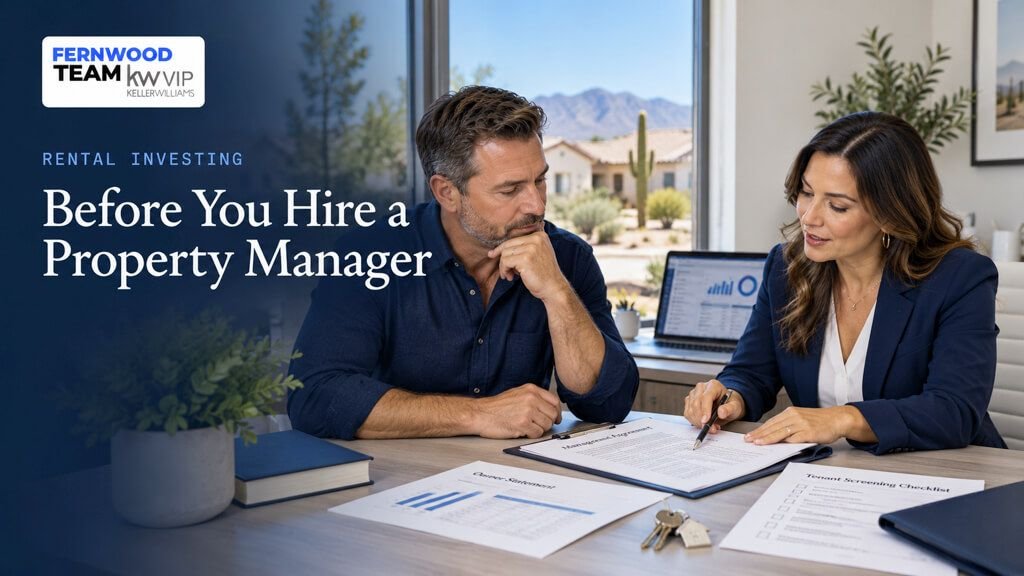
Before hiring a property manager, it’s crucial to understand their role and the value they bring to your investment. A good property manager goes well beyond just collecting rent; they ensure good tenant selection, legal compliance, and expense control, all of which are vital for maximizing your rental income. This article outlines essential steps and considerations for finding a reliable property manager to help you navigate the complexities of real estate investing.
First, I am pleased to announce the launch of my e-book: The Definitive Guide to Rental Property Investing. This is not an AI-generated filler. The framework, strategy, and processes explained in the book are what we learned over 17+ years and after 600+ (and counting) rental properties and 95+ 1031 exchanges: what worked and what didn’t. I want this book to help someone make more money, or at least avoid costly mistakes. I’ve been wanting to do this for a while, so I’m glad it’s finally out. The book, for now, is free in a PDF format. I’d love your feedback before I formally publish it on Amazon. So, please download a copy from our website and let me know what I missed or should add.
Continuing our new-to-real-estate series, investors often ask, “Why hire a property manager when I can collect rent myself?” If collecting rent were the whole job, I’d agree. But a good property manager’s real value goes well beyond that and can be difficult to replicate on your own:
- Tenant selection. This is the most significant value a good property manager brings. A reliable tenant stays for years, pays on time, and takes care of the home. Few property managers consistently select tenants who meet all three criteria.
- Legal compliance. A lease must protect your interests and comply with federal, state, county, and city regulations. Online templates may or may not meet all requirements. A well-written lease also provides a foundation for eviction if necessary.
- Expense control. Maintenance and vacancy costs can erode your cash flow. The property manager must clearly explain tenants’ lease obligations and enforce the lease when necessary.
Most managers I have worked with are little more than rent collectors. You can’t afford that. So how do you find a good one? Below is a brief description of the process I used to screen for property managers. For details, download the book and read Chapter 4.
Start With a List
Define what you need first. For example, if you plan to buy single-family homes in the southwest part of town, drop anyone who focuses on commercial property or skips that area. Then collect names:
- Google, Gemini, ChatGPT or Claude. Use it to find candidates, not judge them. Rankings reflect marketing budgets.
- Online reviews
- Contact realtors or brokers
- Other investors. Ask in online real estate forums such as BiggerPockets groups and local clubs who they use and why. Treat answers as a starting point.
Start with your top five property managers. If none pass the interviews below, evaluate the next five.
The First Interview
Call your top five candidates. Keep it brief, gather facts, and compare later. Sample questions follow; see the book for the full list and why each matters.
- How many years have you managed residential investment property full time?
- How many similar properties do you manage? Bigger isn’t always better.
- Which areas of the city do you cover?
- How many full-time employees do you have? You want a team, not one person who might get sick or quit.
Many candidates won’t pass this stage. That’s the goal: eliminate those who don’t meet your requirements. Schedule follow-up meetings with the top two or three remaining candidates.
The Second Interview
The book includes over 30 questions to assess a property manager’s competence. Choose the ten or fewer that matter most to you. Below are the categories I consider most important.
Tenant selection
This is a property manager’s most important job, and where most fall short.
- How do you screen applicants? A tenant with great credit can still move every year, and every turnover costs you money.
- Do you call the last two landlords? The current one may give a glowing reference to get rid of a problem tenant. The prior one has no reason to lie.
Maintenance and fees
- Do you have in-house maintenance? That can create a conflict of interest.
- Do you mark up repairs?
- Is there a 24/7 emergency maintenance line, and who answers it?
- What is your fee structure, and what does it cover and not cover?
Rent estimates
This is another critical skill of a good property manager. Accurately estimating rent and time to rent not only helps you maximize rental income and minimize vacancy but also helps you avoid buying a bad property in the first place.
- How do you estimate rent and time to rent? If they rely on Zillow or Rentometer alone, move on.
- Will you give me an estimate of rent and time-to-rent before I make an offer?
Payments and reporting
- How do you pay owners? If they still mail checks, cross them off.
- Do I get monthly statements, and is there an owner portal?
- Do you handle HOA dues and violation notices?
Ask for the management agreement, the lease, and a sample owner statement. Read all three.
Visit the office.
Go in person or take a video tour. Is it organized? Does the staff look busy? Does the headcount match what they told you? Ask for a live demo of their software.
Don’t Shop on Price
The cheapest manager rarely offers the best value, and the most expensive may not either. One poorly screened tenant can cost more than years of higher management fees. I know a firm that charges just 5% of collected rent. It sounds inexpensive, but they collect rent and leave everything else to the owner.
If a candidate holds up across all of this, you likely have a strong one.
Related insights
How Clark County Really Calculates Your Property Tax Bill
5 min read Understanding how Clark County (where the Las Vegas Valley is located) calculates property taxes is important for any rental property investor.…

How to Set a Competitive Rent for a Las Vegas Home
3 min read Setting rent for a Las Vegas home is a balancing act. A price that is too low can leave income on…

Why Remote Investors Trust Us with Their Money
5 min read We concluded our new-to-real-estate-investing series last week. The fact is, most of our clients were new to real estate when they…
Thinking about a Las Vegas rental?
A 30-minute conversation about your goals: whether Las Vegas fits your strategy, what a first property costs, and what the process looks like.
- We learn your goals and make sure we’re the right fit
- You get a clear picture of cash requirements and realistic returns
- You leave with next steps, whether or not you work with us