
New to Real Estate Investing Series — Single-Family or Multifamily?

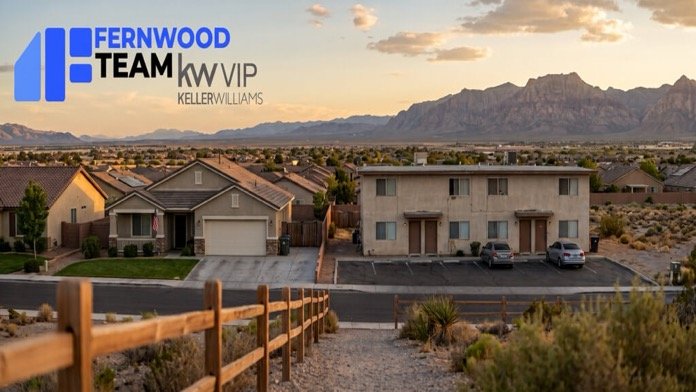
We’re back this week with our new-to-real-estate-investing series. In the first article in this series, we discussed the first step a new investor needs to take: which city(ies) to invest in. After choosing a city, the next question is logically what you should buy. In reality, that question is often expressed as: should I buy a single-family home or a multifamily property?
The honest answer is: It depends.
The better question is not, “Which property type is best?” It is, “Which investment is most likely to help me reach my financial goal?”
Start With the Goal, Not the Property
No property has ever paid rent. The tenant living in it pays the rent.
If your goal is long-term financial independence, you are looking for a reliable monthly income stream that can last 20 to 40 years and grow faster than inflation. The property is simply the vehicle for producing that income.
To reach that goal, an investment needs to do two things:
- Produce reliable rental income.
- Rent growth exceeds inflation.
Reliability depends on the tenant segment the property attracts. Ideally, that segment includes a high concentration of people who stay many years, pay on time, care for the home, and work in jobs that remain relatively stable during economic downturns.
That is why the property type matters very little. What matters is whether the property attracts the right tenants and produces the performance your plan requires.
Tenant Segments Behave Differently
It is a mistake to assume that all renters behave the same way. They do not.
Population averages do not describe every individual, but they are still useful for making investment decisions. For example, shirt manufacturers make most shirts with two sleeves even though not every person has two arms. In the same way, tenant-segment patterns can help an investor choose a property without pretending that every renter in a group is identical.
Las Vegas has three main tenant segments. Below is a table showing average segment characteristics. I imagine all major metros have similar tenant segments.
| Characteristic | Transient | Permanent (we target a subset of this segment) | Transitional |
|---|---|---|---|
| Employment | Lower-wage hourly | Skilled hourly, salaried, or government | Higher-income salaried |
| Typical stay | About 9 months | More than 5 years for the tenant segment we target | Less than 2 years |
| Income reliability | Low | High | Moderate |
| Property care | Low | Excellent | Good |
| Job stability during downturns | Low | High | Moderate |
| Primary property type | Multifamily | Single-family homes | Single-family homes |
Why Multifamily Can Be Challenging in Las Vegas
In Las Vegas, multifamily housing primarily attracts single adults and couples without children. Many residents work in lower-wage occupations and may move more frequently than families with young children, who often remain in the same home for longer.
Multifamily units in this segment rent for $800 to $1,100 per month. Tenants tend to rely on cash, earn entry-level wages, have limited or poor credit histories, and may not have bank accounts.
- More frequent turnover and evictions – with cash based tenants, an eviction has no future consequences so leases mean little.
- Greater exposure to vacancy – With an average stay of 9 months, there are frequent vacancies and renovation costs to make the property ready to re-rent.
- More frequent property damage. I spoke with several property managers who specialize in multifamily housing, and they recommend budgeting $2,000 to $3,000 per turnover to make a unit rent-ready. Although you may be able to obtain a judgment against a former tenant for the damage, collecting the money is often nearly impossible when the tenant relies primarily on cash and changes jobs frequently.
- More difficulty screening applicants through conventional credit measures
- Limited ability to collect unpaid rent or court judgments
- Less capacity for rent increases because rents are constrained by entry-level wages
- Greater employment risk during economic downturns
These are segment-level patterns, not judgments about every individual renter. But an investor planning for decades of dependable income cannot ignore them.
For our clients’ financial objectives, this segment presents two key limitations. First, rent growth may struggle to outpace inflation because tenants’ ability to absorb a rent increase is constrained by entry-level wages. Second, higher turnover and collection risk can reduce income stability and increase operating costs.
Which Produces a Better Return
Here’s a (simplified) 30-year comparison of a four-plex vs two single-family homes that cost approximately the same. To keep the model simple, I excluded recurring operating costs.
| Four-plex | Two SFRs | |
|---|---|---|
| Assumptions | ||
| Purchase price | $800,000 | $400,000 x 2 |
| Rent growth rate per year | 5% | 5% |
| Appreciation rate per year | 5% | 5% |
| Cost per turn | 2000 | 2000 |
| Gross rent per month (1) | 4000 | 4000 |
| Tenant length of stay (Mo) (2) | 9 | 36 |
| Occupancy rate (3) | 75% | 97% |
| Effective monthly rent | ||
| Gross rent | 4000 | 4000 |
| Gross effective rent based on occupancy rate | 3000 | 3880 |
| Monthly equivalent turn cost based on $2,000 per turn (4) | 667 | 108 |
| Effective monthly rent (5) | 2333 | 3772 |
| 30 year total return | ||
| Cumulative cash flow after 30 years (7) | 1860022 | 3093393 |
| Future market value after 30 years. Four-plex value based on cap rate (6) | 3460000 | 5631991 |
| Total return | 5320022 | 8724384 |
Notes:
- To be conservative, I assumed all four-plex units rent for $1,000/Mo, and each single-family home rents for $ 2,000/Mo.
- Based on my research and interviews with property managers, the average four-plex tenant stays for nine months, followed by about three months to renovate/restore the unit and place a new tenant. In comparison, tenants in our target single-family segment tend to stay for more than five years, with about one month needed for turnover. To keep the single-family calculation conservative, I used three years of occupancy followed by one month of vacancy.
- Occupancy rate calculation:
Four-plex:
- 4 units × 12 months = 48 available unit-months
- 4 units × 9 occupied months = 36 occupied unit-months
- 36 ÷ 48 × 100 = 75% occupancy
Two single-family properties
- Available unit-months: 2 × 37 = 74 (36 occupied months plus one month vacant)
- Vacant unit-months: 2 × 1 = 2
- Occupied unit-months: 74 − 2 = 72
- Occupancy rate: 72 ÷ 74 × 100 = 97.3%
- Monthly turn cost – The multifamily assumes all four units turn each year. So, (4 x $2,000)/12 ≈ $667/Mo. For the single families, I assumed one turn every 37 months for both properties. So, (2 x $2,000)/37 ≈ $108/Mo.
- Effective monthly rent:
Four-plex:
- Effective rent for four units: Gross Rent x Occupancy Rate – Monthly turn cost or $4,000/Mo x 75% – (4 x 2000)/12 ≈ $2,333/Mo
Single family:
- Effective rent = $4,000 x 97% – (2 x 2000) / 37 ≈ $3,772/Mo
- The property’s current monthly NOI is $2,333, which equals $27,996 per year. Based on the $800,000 purchase price, the current cap rate is $27,996 ÷ $800,000 × 100 = approximately 3.5%. If the annual NOI grows by 5% per year, it would reach about $120,997 in year 30. Using the cap-rate valuation formula, property value = NOI ÷ cap rate, the estimated sale value would be $120,997 ÷ 3.5% = approximately $3.46 million. This estimate assumes the NOI grows by 5% annually and the cap rate remains at 3.5%.
- For the four-plex, the formula for calculating 30 years of rent, starting with annual rent of $27,996, and increasing by 5% per year is: Total Rent = First-Year Annual Rent × [((1 + Growth Rate)^30 − 1) ÷ Growth Rate]. Using the formula, $27,996 × [((1.05)³⁰ − 1) ÷ 0.05] ≈ $1,860,022. For the two single-family homes, the calculation is $46,560 × [((1.05)³⁰ − 1) ÷ 0.05] ≈ $3,093,393.
Other Multifamily Considerations
A Limited Buyer Pool
At some point, you will sell the property. Multifamily buyers are almost exclusively investors, and investors generally value a property based on the income it produces and the market cap rate. A single-family home will likely sell to owner-occupants, a much larger pool, who may value it based on market value, which is based on recent similar sales.
More Units Do Not Always Mean More Reliable Income
A four-plex provides four sources of rental income—but also four opportunities for vacancy, turnover, and tenant-related issues. If rent from all four units is needed to cover the property’s expenses, a single vacant or nonperforming unit can produce negative cash flow that must be covered from reserves.
Good Deals May Be Hard to Find
Multifamily properties are usually owned by investors, and investors rarely sell performing assets. In more than 17 years in Las Vegas real estate, all the multifamily properties I have evaluated were underperforming due to deferred maintenance, tenant issues, or both.
This does not mean every multifamily property is a bad investment. It means buyers should build their financial analysis using tenant interviews, property manager input, and other independent sources. Do not rely only on the numbers provided by the seller.
Higher Maintenance Exposure
A four-plex may share a roof and other structural components, but maintaining four households—with separate HVAC systems, appliances, electrical systems, and plumbing—results in higher maintenance costs than maintaining two single-family homes.
Another factor is that most multifamily properties in Las Vegas were built before 1987. Many will require (expensive) replacement of some or all of the systems.
What We Have Seen With Clients
We have completed more than six 1031 exchanges in which clients moved from multifamily properties into multiple single-family homes. The most common reasons were tenant issues and high maintenance costs.
More recently, we helped a client exchange one multifamily property for six single-family homes. We also expect to complete another six or seven multifamily exchanges in 2027.
These examples do not prove that multifamily investing never works. They show why property type should not be evaluated in isolation. Tenant behavior, operating costs, rent-growth potential, maintenance costs, purchase price, and exit strategy all matter.
Why We Focus on Single-Family Homes
In 2005 and 2006, I researched Las Vegas tenant segments to find renters who were likely to:
- Stay for more than five years
- Pay rent on time
- Take good care of the property
- Maintain stable employment during downturns
After identifying the target segment, I interviewed multiple property managers to learn what those renters were already renting, which were almost exclusively single-family homes.
Then we bought similar properties.
We let the people paying the rent show us what they were willing and able to rent. From that research, we developed a property profile and used it to screen every potential purchase. Instead of searching the entire market for anything labeled a “deal,” we focused on the small group of properties that met our criteria.
Did it work?
Here are the results over 17+ years:
- More than 600 properties delivered: More than 170 clients worldwide have invested through us, with fewer than ten living in Las Vegas.
- Repeat clients and referrals: Clients own, on average, more than three properties, and most new business comes from referrals from existing clients.
- Long-term tenants: The average tenant stays for more than five years, reducing vacancy and turnover costs.
- Reliable income: During the 2008 financial crisis, our clients experienced no rent declines or vacancies. Tenants in this segment tend to hold stable jobs that persist through recessions.
- Strong long-term growth: Since 2015, the properties have averaged approximately 8% annual appreciation and 5% annual rent growth.
- Low vacancy: Portfolio-wide vacancy has remained below 2%.
- Nine evictions: Across more than 1,100 tenants over 17-plus years, evictions have remained extremely rare.
The Bottom Line
Do not start by choosing a property type (or chasing a “deal”) and hoping its tenant segment performs. Start with your financial goal, then identify a tenant segment with a high concentration of reliable renters. From there, buy the types of properties those tenants already choose to rent.
Depending on the city, that might mean high-rises, condos, single-family homes, multifamily properties, or something else entirely. The property type is simply the container. The goal is to choose one that attracts reliable tenants.
Accumulating property or buying a specific property type is not the goal. Achieving your long-term financial goal is.
Related insights

How Will You Finance Your First Rental Property?
7 min read Continuing our new to real estate investing series, this week I will discuss the financing options available to first-time investors. Several…
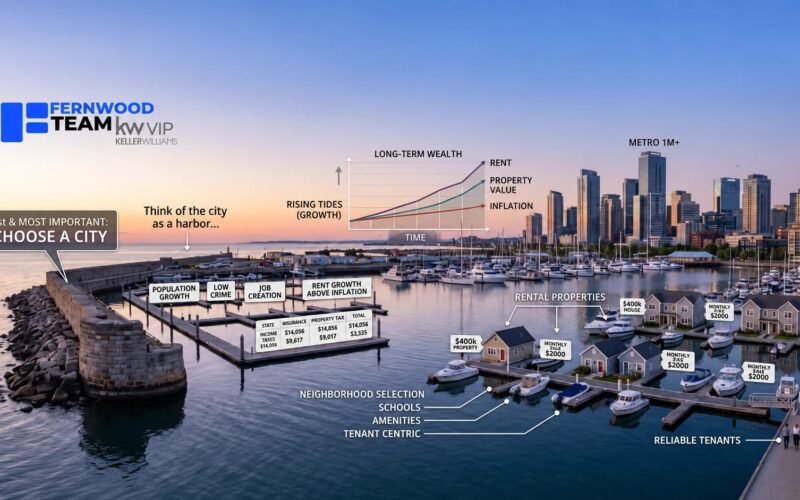
New to Real Estate Investing Series – Where Should I Start?
Most of our clients started with no real estate investing experience and a similar goal: “I want to learn how to build long-term wealth…
The Affordability Fix Nobody Wants to Talk About — and Why It Won’t Reach Our Target Market
Building more homes is the most effective way to improve housing affordability. But in the Las Vegas segment we target, scarce land and high…
Thinking about a Las Vegas rental?
A 30-minute conversation about your goals: whether Las Vegas fits your strategy, what a first property costs, and what the process looks like.
- We learn your goals and make sure we’re the right fit
- You get a clear picture of cash requirements and realistic returns
- You leave with next steps, whether or not you work with us