
New to Real Estate Investing Series – Where Should I Start?

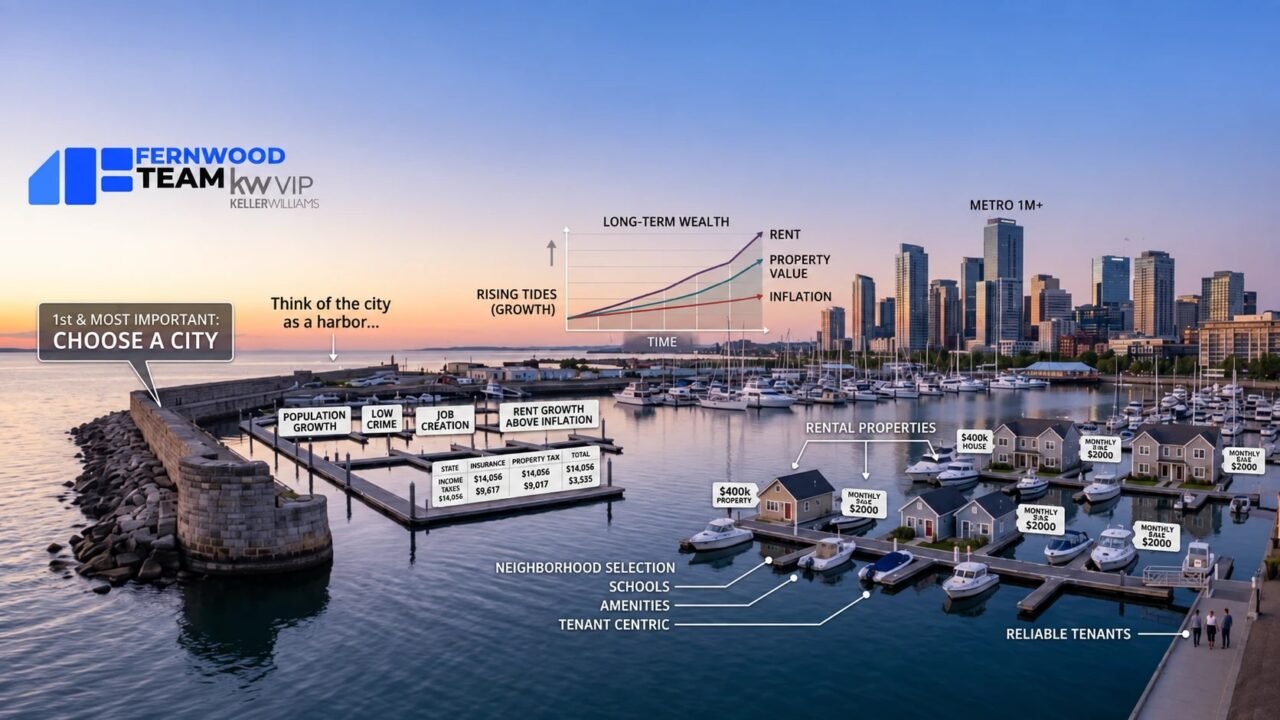
Most of our clients started with no real estate investing experience and a similar goal: “I want to learn how to build long-term wealth through rental properties.”
The questions I hear most often from new investors include:
- Where should I start?
- How do I choose the right city and neighborhood to buy properties?
- Multi-family or single-family?
- What financing options are available for first-time investors?
- How do I analyze my first rental property?
- How much capital should I realistically have before buying?
- How do I calculate cash flow, account for expenses, and evaluate returns?
- What should I know about working with property managers?
- What common mistakes should I avoid as a beginner?
I will start with the first question this week, and answer the others over the next few weeks.
To build long-term wealth through rental properties, the first and most important question to answer is which city to invest in. Do not assume that you should invest in the city you are living in. You can live wherever you like, but invest only where it supports your financial goals.
Choosing a City for Long-Term Financial Independence
To achieve long-term financial independence, your rental income must increase faster than inflation, or you won’t have the additional dollars you’ll need to pay future, inflated costs.
However, rent and property value growth are driven by the city, not the individual property. They depend largely on population growth and the housing demand it creates.
Think of the city as a harbor and rents and prices as boats in that harbor. When the tide comes in (population grows and demand rises), all boats rise. When population falls, rents decline or stagnate. This is why the city you choose matters more than the property you buy. No matter how good an individual property is, it can only perform within the limits of the city around it.
Characteristics of a city that is likely to support long-term price and rent growth faster than inflation (in other words, significant and sustained jobs and population growth):
- Metro population above 1 million and consistent growth: A large metro area offers employers a deep labor pool, established transportation networks, and supporting business services. See: Wikipedia metro population data
- Low crime rates: Public safety helps cities attract and retain employers and residents. [Source]
- Pro-business environment: Predictable regulations, efficient permitting, and reliable infrastructure help businesses start and grow. Look for evidence of sustained job creation, business investment, and employer relocations across multiple industries. Use Google or an AI tool to compare cities on these factors, and verify the findings with current, credible sources.
- Personal income rising faster than inflation? Federal Reserve Bank of St. Louis Per Capita Personal Income by County (put your county and state in the search bar).
- Rents and home prices already showing long-term growth above the inflation rate. Zillow research data
- Low operating costs: Competitive labor costs, real estate, utilities, insurance, and tax costs can help attract employers. For rental properties, compare property taxes and insurance. Property taxes and insurance vary widely by state. Below is the state average annual operating cost for a $400,000 property:
| State | Insurance | Property taxes (3) | Total |
|---|---|---|---|
| Florida | $10,996 (1) | $3,640 | $14,636 |
| Texas | $2,317 (2) | $6,720 | $9,037 |
| Nevada | $965 (2) | $2,360 | $3,325 |
Sources:
To offset higher operating costs, a Florida property would need $11,311 more annual rental income than a Nevada property; a Texas property would need $5,712 more, assuming other expenses are equal.
Lower operating costs mean more rental income stays in your pocket.
For our full write-up on evaluating a city for rental property investment, see this guide: How to Choose a City for Rental Property Investment.
Choosing the Right Neighborhood for Your Investment Property
In addition to rental income increasing faster than inflation, it has to be reliable; the income must come in every month on schedule, in good times or bad. Income reliability depends on your property being occupied by a reliable tenant, someone who stays for many years and pays the rent on schedule. Unfortunately, reliable tenants are not the norm.
You can improve your odds (of always getting a reliable tenant in your property) by buying properties that attract tenants who meet these requirements. The easiest way to identify those properties is to interview multiple experienced property managers and ask:
- “If your goal is to buy properties that attract tenants who stay for many years and pay rent on time, what would you buy, and where?”
When I started investing, I asked multiple experienced property managers this question. Almost all recommended the same property type and locations.
Then, buy properties similar to what this segment is already renting.
Conclusion
As new investors, the first and most important question you need to answer is which city to invest in. The city determines the long-term performance of your investments. Choose a city using criteria, not headlines, opinions, or convenience.
After that, determine which neighborhoods and types of properties to buy. That process is straightforward since your goal is to attract reliable tenants. I will discuss this more in the next letter.
Related insights

How Will You Finance Your First Rental Property?
7 min read Continuing our new to real estate investing series, this week I will discuss the financing options available to first-time investors. Several…
New to Real Estate Investing Series — Single-Family or Multifamily?
We’re back this week with our new-to-real-estate-investing series. In the first article in this series, we discussed the first step a new investor needs…
The Affordability Fix Nobody Wants to Talk About — and Why It Won’t Reach Our Target Market
Building more homes is the most effective way to improve housing affordability. But in the Las Vegas segment we target, scarce land and high…
Thinking about a Las Vegas rental?
A 30-minute conversation about your goals: whether Las Vegas fits your strategy, what a first property costs, and what the process looks like.
- We learn your goals and make sure we’re the right fit
- You get a clear picture of cash requirements and realistic returns
- You leave with next steps, whether or not you work with us